Domestic abuse and Violence Against Women and Girls (VAWG)
Football can be a highly emotional game and no matter how your team do, there is no excuse for taking your feelings out on your family or partner.
Domestic abuse is any incident of threatening behaviour, violence or abuse (psychological, physical, sexual, financial or emotional) and it could lead to a breakdown of your relationship and/or family. You could even be arrested and go to prison if you are convicted of an offence.
In Hertfordshire Constabulary, we receive an average of 59 domestic abuse-related reports every single day.
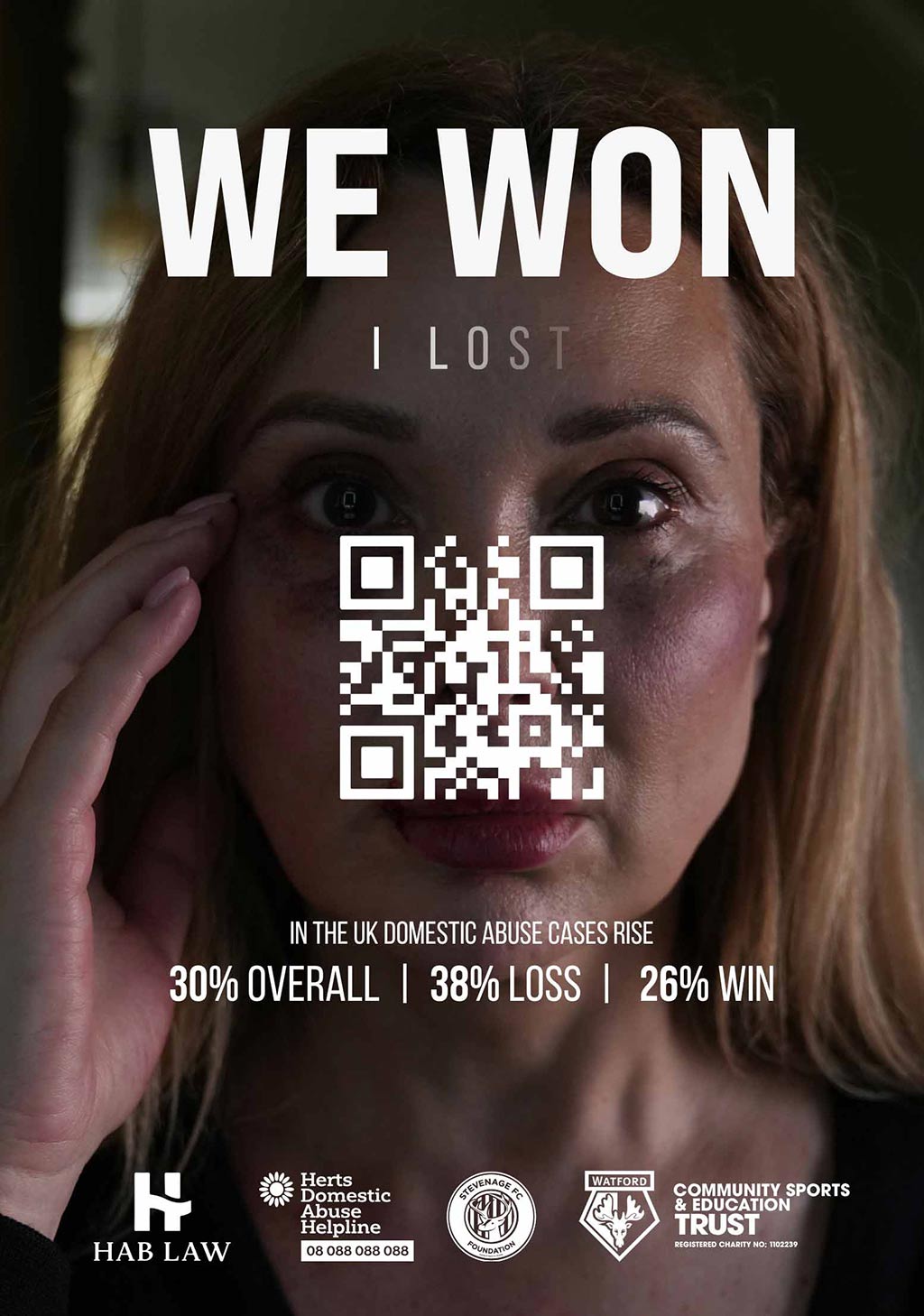
Research shows that domestic abuse and Violence Against Women and Girls (VAWG)-related offences increase during football tournaments. Research by Lancaster University showed cases of domestic abuse increased by 38% when England lost a match and 26% when they won or drew. Furthermore, a report issued before the FIFA World Cup 2022™ shows that The Centre for Economic Performance (LSE) conducted research into the links between football, alcohol and domestic abuse using data from Greater Manchester over a period of eight years.
The report outlines that football matches do change the dynamics of domestic abuse, with an 11% increase the following day after England fixtures that are late in the day/evening matches. The report shows that incidents start to increase after the game, growing by around 5% every two hours in the first hour following the game and culminating in a peak around ten hours to twelve hours post-match (8.5% increase). The effect is entirely driven by male-on-female abuse while female-on-male abuse remains unchanged and increases in domestic abuse during football matches is exclusively driven by alcohol consumption and not heightened emotions.
If you are a victim of domestic abuse or affected by domestic abuse, you can call the Hertfordshire Domestic Abuse Helpline on 08 088 088 088. It is free to call between 10am and 8pm from Monday to Friday. This number will not appear on your phone bill. You can also visit the Herts Sunflower website.
You can also report domestic abuse to us online. If you're a victim of domestic abuse, or know someone who is, and there's an emergency that's ongoing or life is in danger, call 999 now.
Further information
Domestic abuse is controlling, bullying, threatening or violent behaviour. It happens between people aged 16 and over and their partners, ex-partners or family members.
It often involves more than one incident of abuse. However, the abuse only needs to happen once to be domestic abuse. It can happen to anyone. It doesn't matter what your ethnicity, gender, sexuality or social background is.
If you’re a victim of domestic abuse, there are different types of abuse you might experience. Domestic abuse can take many forms. It doesn’t always involve physical violence.
Our first priority is to protect you and any children you have. If the situation is an emergency an officer will attend and, if proportionate, necessary and lawful to do so, arrest the perpetrator, and take action to protect you from further harm – giving you time to think.
Report it
If you're a victim of domestic abuse, or know someone who is, and there's an emergency that's ongoing or life is in danger, call 999 now.
If you have a hearing or speech impairment, use our textphone service 18000 or text us on 999 if you’ve pre-registered with the emergencySMS service.
Other ways to report:
- online
- by calling 101 (If you have a hearing or speech impairment, use our textphone service on 18001 101)
- in the safety of your local police station (if you require a translator, we can provide someone initially by phone and later in person)
We are committed to tackling violence against women and girls (VAWG) working with our partners so that women and girls can feel, and be, safe in the county.
VAWG includes a wide range of offences including domestic abuse, sexual offences, honour-based abuse, stalking, coercive control, spiking and even murder.
Misogynistic behaviour that may not reach the legal threshold of a crime, can still have a significant impact on women and girls, making locations or activities feel unsafe and women having to change their behaviour to avoid them. The impact on victims and survivors of these offences can be life changing.
Men and boys are also victims of these offences, and we offer the same support and service to them as we do women and girls. However, women and girls are disproportionately affected by these offences, and as a result it is necessary to develop a strategic response to this problem.
VAWG is recognised as one of the most serious issues affecting public safety. Following the tragic murder of Sarah Everard in 2021, there has been a fundamental shift in the way police forces focus on VAWG. In 2023, the Home Secretary included VAWG within strategic policing.
The VAWG strategy has four key priorities: prevention, protection, pursuit of perpetrators and preparation within policing. We work with specialist partner agencies and communities to develop and improve our response to VAWG.
If you’re experiencing domestic abuse, we can put you in touch with other support organisations that understand your specific needs. By clicking the button below, you’ll find a list of organisations who can assist you.